

 0
 0
 0
A careful check, the right clean and honest repair notes can help a favourite jumper be worn again.
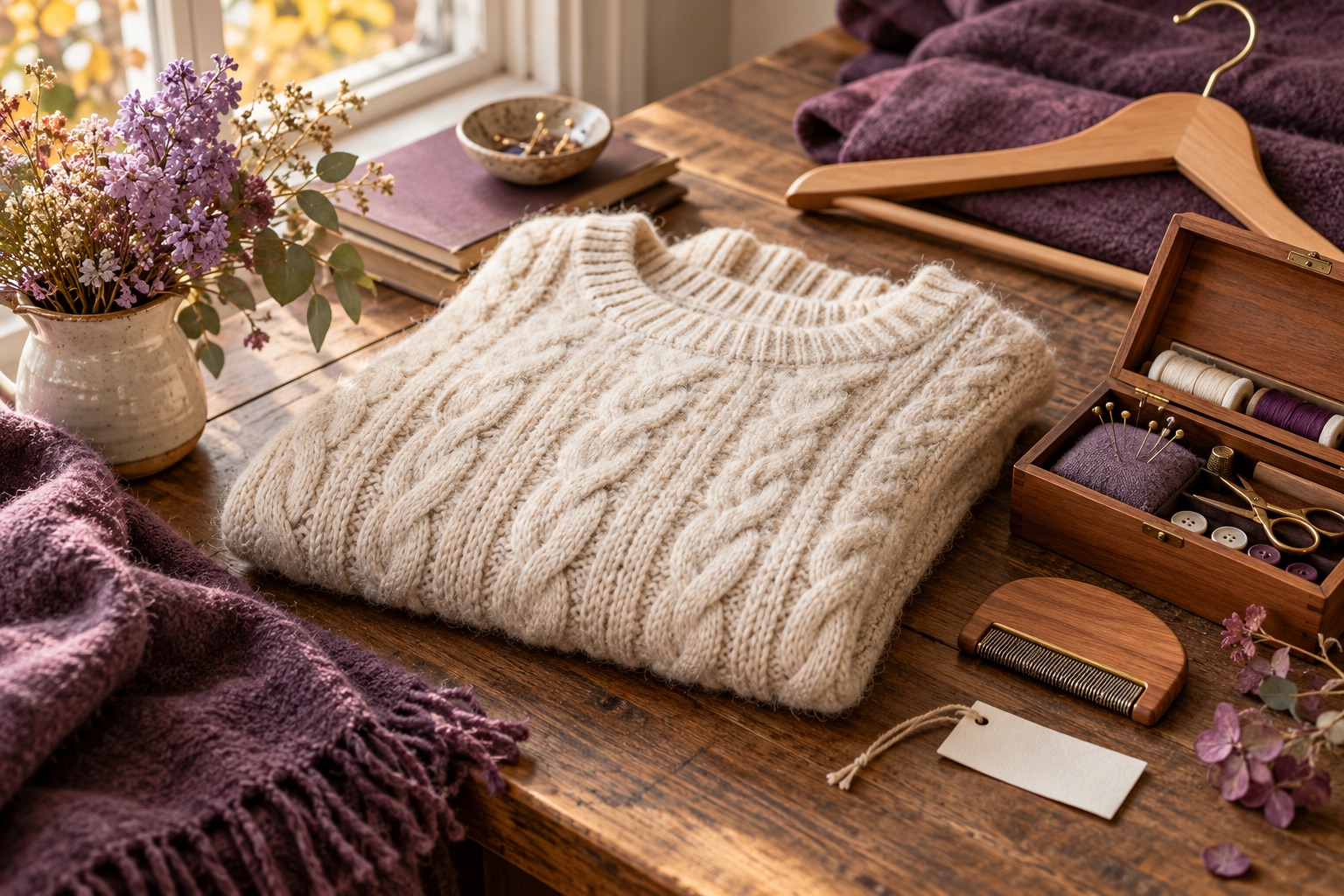
A good jumper can have years of wear left in it, but knitwear asks for a little more attention than a quick glance at the front. The fibres, seams and shape all affect how it feels and lasts. Whether you are keeping a secondhand find, preparing a gift or considering a sale, start by finding out what the garment actually needs.
Lay the knit flat in good light. Look at the underarms, cuffs, collar and hem, where rubbing and stretching often appear. Check the shoulders for hanger bumps and the seams for loose threads or small holes. Turn it over and inspect the back. A tiny hole can be repairable, but it is easier to plan a repair before washing or stretching the fabric. Note any mark you cannot identify rather than assuming it will disappear.
The label, when present and legible, should guide cleaning. Different fibres and constructions behave differently; a setting that works for cotton may change the shape or texture of another knit. If the label is missing, do not make a confident fibre claim from touch alone. Ask a professional cleaner for advice when the garment is valuable or you are unsure. Sometimes airing a clean-looking piece is more sensible than repeated washing.
Small balls of surface fibre can appear where fabric rubs. They are different from thinning, holes or broken yarn. Work gently if you use a fabric comb or another suitable tool, and test a discreet area first. Pulling at a snag can make it worse; a repair may need a different approach. If you plan to sell the item, photograph its present condition before doing anything that could change it.
Follow the label's drying guidance and avoid hanging a wet jumper by the shoulders. When storing knitwear, folding often avoids the stretched points a hanger can leave. Keep it clean and dry, and check stored pieces occasionally for signs of damage. These small habits are not a guarantee against wear, but they make it easier to notice a problem while it is still manageable.
If the piece is ready for someone else, include the fibre content if the label confirms it, actual measurements, and photographs of any repairs or remaining flaws. A buyer or gift recipient may welcome a carefully mended jumper; they should simply know what they are receiving. Describe what you did, not what you hope a future clean might achieve.
Have a question about a tricky repair or a favourite rescued knit? Explore the VROOL community forums and start a specific conversation about the fabric and the problem.
What is one piece of knitwear you have kept wearing because you cared for or repaired it?
VROOL editorial guide. Prepared with AI assistance and reviewed for current product wording on 26 October 2026. Cover image: AI-generated illustration; it does not depict a real listing, customer or event.

FASHION. AI. COMMUNITY.
Vrool is your hybrid AI fashion marketplace.
Shop, style, search and connect in one place.
Find fashion across Vrool and the web.
Give preloved fashion a new home.
Keep your clothes and outfit ideas together.
Explore new looks with virtual try-on.
Share your style and discover inspiration.
Discover fashion through short videos.
Meet people who share your interests.
Discover fashion events and meetups.
Connect through live fashion streams.
Explore fashion offers.
Find your next fashion bargain.
Discover codes for fashion savings.
Keep the finds you love in one place.
Give your Y2K pieces a second life.
More than buying and selling. More ways to make fashion yours.

 Home
 £1 Items
 Wardrobe
 Social Fashions
 Vrool Reels
 Search Engine
Vrool Stream
 Events Fashion
 Community
 Offers
 Favourite Items
Find Deals
Find Coupons
 We Buy Y2K
Wholesale


 Sell
 Sign in / Register
 Location


 Events
 Social




 Log in
 Register account
 Help




Comments